Losing a limb can change almost every aspect of your life, from everyday activities to the plans you have for your future. How much compensation for amputation claims that can be awarded depends on the severity of the injuries suffered, along with the financial losses they’ve caused. A settlement can reflect both the physical and psychological consequences of limb loss and the support you may need to rebuild your independence.
You could be eligible to claim if your amputation resulted from a workplace or road traffic accident caused by another party’s failure to take appropriate care, or from negligent medical treatment that caused avoidable limb loss. Compensation can also address the financial impact of your injury, including lost earnings, rehabilitation expenses and future prosthetic costs.
At How Much Compensation, we understand that dealing with a legal claim may feel overwhelming when you are already adapting to life after an amputation. Our advisors can connect you with specialist solicitors from our panel who can take responsibility for investigating what happened, assessing your long-term needs and pursuing a settlement that properly reflects the consequences of your injury.
Contact our advisors for a free initial consultation. We can listen to what happened, explain whether you may have grounds to claim and help you understand the next steps without any obligation to proceed.
We are here to help you
Here at HowMuchCompensation.co.uk our expert advisors are on hand 24 hours a day 7 days a week to assess your compensation claim. Should you require free advice we can connect you to a specialist solicitor.
Jump To A Section
- How Much Compensation Could I Receive For Amputation Claims?
- Which Factors Could Affect An Amputation Compensation Payout?
- What Financial Losses Could An Amputation Settlement Include?
- Can I Make A Compensation Claim After An Amputation?
- Which Accidents Could Result In An Amputation Claim?
- How Could An Amputation Affect Your Life?
- What Evidence Could Support Your Amputation Claim?
- How Could Our Team Help With Your Amputation Claim?
- More Information
How Much Compensation Could I Receive For An Amputation Claim?
The amount of compensation you could receive for an amputation claim depends on how seriously your injury has affected your life. To assess how much compensation for amputation claims may be appropriate, solicitors consider two heads of loss. General damages cover the pain and suffering caused by your injury, including its effect on your independence. Alongside this, special damages cover the financial consequences of your amputation, such as lost earnings if you cannot return to work.
The Judicial College Guidelines (JCG) provide compensation brackets that help solicitors value general damages according to the nature and severity of an injury. For amputation compensation, any phantom limb pain and the extent to which your independence has been affected are relevant when assessing this part of your claim.
The table below presents examples of these guideline figures, which are not guaranteed payouts and exclude special damages. The highest figure is not taken from the JCG and instead illustrates how compensation for multiple serious injuries and associated financial losses could exceed the guideline amounts.
Compensation Table
Please be aware that this table is intended to provide guidance only.
| Injury Type and Severity | Guideline Payout Figure | Table Notes |
|---|---|---|
| Multiple Very Serious Injuries with Special Damages | Up to £1,000,000 and above | Multiple very serious injuries with associated financial losses, including a loss of income, medical expenses and substantial care needs. |
| Loss of Both Arms | £318,120 to £396,340 | Loss of both arms causes profound disability and dependence on assistance with everyday activities. |
| Loss of One Arm (i) | Not less than £181,200 | Amputation of one arm at the shoulder. |
| Loss of Both Legs | £318,120 to £372,570 | Both legs are lost above the knee, or one is lost above and the other below the knee. |
| Below-Knee Amputation of Both Legs | £266,200 to £356,840 | The award reflects the amputation level, phantom pain and effectiveness of prosthetic limbs. |
| Above-Knee Amputation of One Leg | £138,490 to £181,610 | Compensation reflects the level of limb loss and resulting mobility difficulties. |
| Total or Effective Loss of Both Hands | £185,840 to £266,200 | Extensive damage leaves both hands with little or no practical function. |
| Total or Effective Loss of One Hand | £127,050 to £144,860 | Covers surgical or traumatic loss of a hand, with higher awards where the dominant hand is affected. |
| Amputation of Both Feet | £223,800 to £266,200 | Loss of both feet significantly affects mobility because both ankle joints are lost. |
| Amputation of One Foot | £110,930 to £144,860 | Loss of one foot and its ankle joint causes substantial mobility restrictions. |
To ask our advisors how much compensation for amputation claims you may be eligible to receive, or for a free eligibility consultation, contact us today.
We are here to help you
Here at HowMuchCompensation.co.uk our expert advisors are on hand 24 hours a day 7 days a week to assess your compensation claim. Should you require free advice we can connect you to a specialist solicitor.
Which Factors Could Affect An Amputation Compensation Payout?
The factors that could affect an amputation compensation payout include the extent of limb loss and how it affects your everyday life. For example, phantom limb pain or difficulty using a prosthetic limb may make daily tasks harder, increasing your need for support. The financial consequences also matter, particularly if you can no longer do your previous job. These differences mean that two people with similar amputations may receive different awards.
The level and location of your amputation are particularly important. For example, losing a leg above the knee can create greater challenges with mobility and prosthetic use than a below-knee amputation.
Your age may be relevant when assessing the duration of future care needs and financial losses. Medical evidence can establish the likely persistence of complications and their effect on your independence, while compensation may be reduced where your own actions contributed to the injury and you are found partly responsible.
Understanding what influences your compensation can help you make informed decisions about your claim. Speak with our advisors for a free initial consultation and find out how specialist legal guidance could help you pursue a settlement that reflects your circumstances.
What Financial Losses Could An Amputation Settlement Include?
An amputation settlement could include financial losses such as lost earnings, prosthetic limb costs and ongoing care expenses. These losses form part of your special damages and can cover both expenses you have already incurred and future costs. It is important that you save any documentation, such as receipts and invoices, related to items and services purchased to help cope with your injury. Also, your payslips can help you recover your lost income.
The financial consequences of losing a limb can extend far beyond the initial treatment and recovery period. Our advisors can listen to your circumstances and help you access specialist legal support to assess the financial impact of your amputation.
Can I Make A Compensation Claim After An Amputation?
You could make a compensation claim after an amputation if your limb loss resulted from an accident caused by another party’s failure to take appropriate care, or from negligent medical treatment that caused an avoidable amputation.
To establish whether you have grounds to claim compensation, three key requirements must be met:
- You were owed a duty of care: An employer, another road user or a healthcare provider had a legal responsibility towards you. This could involve taking reasonable steps to protect your health and safety at work or providing treatment that meets the appropriate professional standard.
- That responsibility was not met: The responsible party failed to take suitable precautions or deliver the required standard of treatment. For example, an employer failed to ensure dangerous machinery was fitted with appropriate safety guards.
- The failure caused your amputation: You must establish that the failure to take appropriate care or provide suitable treatment caused the limb loss for which you are seeking compensation.
An amputation does not automatically establish grounds for compensation, even where the consequences are life-changing. If limb removal was medically necessary despite appropriate treatment, the outcome alone would not support a medical negligence claim.
You do not need to establish legal responsibility on your own. Our advisors can discuss what happened and connect you with a specialist solicitor from our panel who can investigate who was responsible for your amputation and assess whether you have grounds to claim.
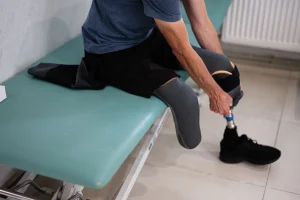
Which Accidents Could Result In An Amputation Claim?
Workplace accidents, road traffic accidents and negligent medical treatment could result in an amputation claim where another party’s unsafe actions or substandard care caused your limb loss.
Accidents At Work
Accidents involving dangerous machinery can cause severe injuries at work that result in traumatic amputations or make surgical limb removal necessary. Employers must take reasonable steps to protect your health and safety by providing suitable training and ensuring work equipment is safe to use.
While you were operating an industrial cutting machine, your hand became trapped in exposed moving parts because your employer had failed to install a suitable safety guard, resulting in injuries that required amputation.
Road Traffic Accidents
Road traffic accidents can cause serious crushing injuries that result in limb loss, particularly where a motorcyclist or pedestrian has little protection from the force of a collision. An amputation claim may be possible where another road user’s failure to drive with appropriate care caused the collision and your injuries.
A speeding driver lost control and struck your motorcycle, trapping your lower leg beneath the car and causing injuries so severe that surgeons were unable to save it.
Medical Negligence
Medical negligence can cause an avoidable amputation where a healthcare provider fails to diagnose or treat a condition to the appropriate professional standard. Delayed treatment of a serious infection can allow tissue damage to progress until limb removal becomes necessary.
You underwent a lower-leg amputation after hospital staff repeatedly discharged you without treating a worsening foot infection, despite clinical signs requiring urgent treatment that would have prevented the loss of your limb.
Our advisors can discuss the circumstances of your amputation and help you understand whether another party may have been responsible. Where appropriate, we can connect you with a specialist solicitor from our panel who can investigate what happened and assess how much compensation for amputation claims you may be eligible to receive.
How Could An Amputation Affect Your Life?
An amputation could affect your life by causing lasting physical and psychological difficulties, reducing your independence and changing your daily routines and personal relationships. These consequences can continue long after your initial recovery, particularly where limb loss requires significant changes to your future plans.
The wider effects of an amputation injury can include:
Persistent pain around your residual limb can disrupt sleep and everyday activities. You may also experience phantom limb pain, where painful sensations appear to come from the missing limb.
Losing a leg could make walking or climbing stairs difficult, while an upper-limb amputation may leave you needing assistance with dressing or preparing meals. Adapting to a prosthetic limb can also require ongoing rehabilitation.
Anxiety, depression and changes in body image can influence your confidence, personal relationships and emotional wellbeing as you adjust to life after limb loss.
The lasting effects of limb loss deserve careful consideration when pursuing compensation. Speak with our team about how losing a limb has affected your life, and we can help you take the first steps towards having those consequences properly recognised when determining how much compensation for amputation claims could be owed in your particular circumstances.
What Evidence Could Support Your Amputation Claim?
Evidence that could support your amputation claim includes an accident report showing how your injury occurred. Alongside this, medical records can document the treatment you received and the lasting effects of your limb loss. Specialist assessments can then help establish what support you may need in the future. The evidence required will depend on the circumstances of your amputation.
Three particularly relevant types of evidence include:
- Accident reports and supporting evidence: Workplace accident reports and photographs of unsafe machinery can help establish how a traumatic amputation occurred. Following a road traffic accident, police reports or witness statements may help clarify the circumstances of the collision and another road user’s actions.
- Medical records: Hospital notes and surgical reports can establish the extent of your injury, the treatment provided and why limb removal was necessary. In medical negligence claims, an independent medical expert can examine these records to assess whether substandard treatment caused an avoidable amputation.
- Specialist assessments: Independent medical and prosthetic assessments can document lasting complications, such as phantom limb pain, and establish your current and anticipated prosthetic requirements. Their findings can also support the assessment of future rehabilitation and care costs.
You do not need to gather every piece of evidence before seeking advice. A specialist solicitor from our panel can identify which records and assessments are needed to support your amputation claim, taking responsibility for obtaining the relevant evidence on your behalf.
Our advisors can help you access specialist legal support without adding to the demands you are already facing. Contact us for a free initial consultation to discuss your amputation claim and whether a solicitor from our panel could represent you on a No Win No Fee basis.
How Could Our Team Help With Your Amputation Claim?
Our team at How Much Compensation could help with your amputation claim by reviewing how your injury occurred, explaining whether you may have grounds to seek compensation and connecting eligible claimants with experienced solicitors from our panel who handle serious and life-changing injury claims.
Adjusting to limb loss can demand much of your time and energy, particularly when rehabilitation and concerns about your future are already weighing on you. Our free initial consultation provides a straightforward route to specialist legal support, helping you find someone with the experience to manage a complex amputation compensation claim.
If a solicitor from our panel agrees to represent you, they could provide practical support by:
- Taking responsibility for investigating your amputation: Your solicitor can look into what happened so you do not have to establish this yourself. Depending on the circumstances, they may obtain accident reports or workplace safety records. Where your claim concerns medical treatment, relevant medical evidence can help establish who was responsible. These findings can then be used to support your claim.
- Making sure your future needs are properly understood: Specialist prosthetic and rehabilitation assessments can establish what support you need as you adapt to limb loss. They can also consider how those needs may change over time. This may include whether adaptations to your home are necessary.
- Managing your compensation claim and negotiations: Your solicitor can assess how your amputation has affected you physically, alongside its psychological impact. They can then calculate the financial losses arising from your injury, accounting for future costs such as replacing your prosthetic limb. With evidence supporting the valuation, they can present your claim and negotiate with the responsible party or their insurers.
Throughout the claims process, your solicitor can explain important developments and provide clear guidance on decisions affecting your case, allowing you to concentrate on your recovery and rebuilding your independence.
Speak With One Of Our Advisors
Specialist legal support can make a difficult situation easier to manage. Contact our advisors for a free initial consultation, and we can assess whether your circumstances are suitable for referral to an experienced solicitor from our panel. You can:
- Phone our advice team on 0800 408 7826.
- Open the live chat in the bottom left of the screen.
- Or contact us online by completing a callback form.

More Information
View more of our personal injury claims guides here:
- Find out if you could make a public liability claim with our panel of experts.
- Read our guide on how much compensation for a broken leg you could receive.
- Learn when you could seek compensation for a rear-end collision with our panel of experts today.
These further resources offer additional guidance:
- The Limbless Association is a charity that provides a range of practical and emotional support to amputees.
- Access free road safety resources from Think! The government’s road safety campaign.
- This NHS first aid guidance provides important information for responding to incidents.
Thank you for reading our guide on how much compensation for amputation claims you could seek. Our advice team are available 24 hours a day to answer your questions, or provide a free, no-obligation eligibility check. Get in touch today via the details provided above.